
LAND & LIFE ADVICE
How Do You Choose Outdoor Lighting for Shorter Days?
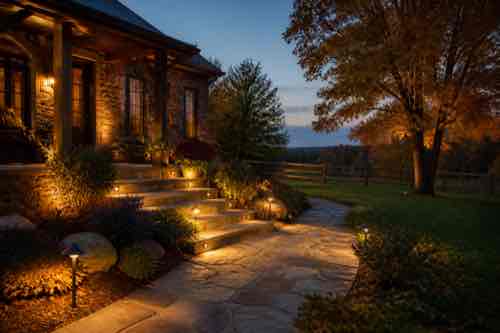
Choose outdoor lighting for shorter days by lighting the actual walking route, steps, gates, and work areas with weather-suitable fixtures that do not create glare or leave dark transitions.
Choose outdoor lighting around the routes people use
Walk the property at dusk and after dark before adding fixtures. Identify the route from parking to the house, steps, changes in elevation, gates, animal areas, and places where people carry supplies. The goal is enough even light to see footing and obstacles, not the brightest possible light at a single point.
Shorter-days lighting checklist
- Light steps, thresholds, changes in elevation, and high-use paths.
- Choose fixtures rated for the location and weather exposure.
- Aim light downward where people walk and avoid glare into eyes, windows, or neighboring property.
- Keep cords, fixtures, and connections protected from water and damage.
- Check lights after storms and replace damaged equipment rather than improvising repairs.
Combine lighting with safe footing
Lighting cannot correct ice, a loose rail, a wet mat, or runoff across a step. Use it alongside clear paths, stable surfaces, and maintenance of the route. Outdoor lighting for shorter days is most useful when it makes the safest path easy to see before someone has to use it in poor weather.
For more seasonal property-safety guidance, browse Land Life Advice.
Bottom line: Good outdoor lighting makes routes, steps, and work areas visible without glare, and it supports—not replaces—safe footing and maintenance.