
LAND & LIFE ADVICE
What Should You Check on a Pergola Before Winter?
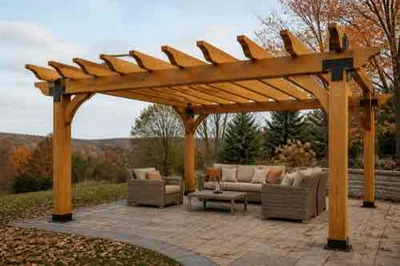
Before winter, inspect a pergola for loose connections, water-trapping debris, and finish wear so seasonal moisture and wind do not turn a small issue into a structural repair. A short check is most useful while the weather is still comfortable and dry.
Start with a quick site check
Look over posts, beams, braces, and hardware for movement, splits, rot, corrosion, or fasteners backing out. Clear leaves from beam tops, gutters, and any shade-cover hardware so water does not sit against wood. Check the bases of posts closely, since splashback and ground contact are common trouble areas.
Practical steps to take now
- Wash off surface dirt gently and let the wood dry before applying any compatible maintenance coating. Do not paint or seal damp wood or use a coating to hide active decay. If a structural member feels soft, shifts, or has a significant crack, have it evaluated before snow and wind loads arrive.
Avoid the common shortcut
Work from the cause of the problem, not only its visible symptom. Seasonal maintenance is most effective when water flow, access, and safe use are considered together. Make one change at a time and recheck after ordinary rain or use so you can tell what solved the issue.
Bottom line: winter, inspect a pergola for loose connections, water-trapping debris, and finish wear so seasonal moisture and wind do not turn a small issue into a structural repair. A short check is most useful while the weather is still comfortable and dry.