
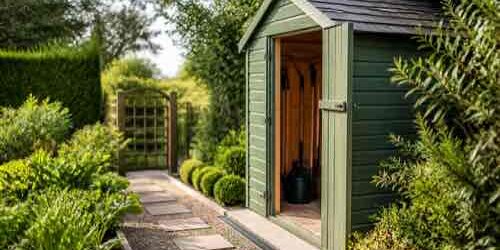
Choose a garden-shed location that keeps tools close to the work while protecting drainage, paths, sun needs, delivery access, and future garden growth. The closest spot is not always best if it shades planting beds, blocks a wheelbarrow route, or sits where water collects after rain.
Map daily movement first
Walk the route from storage to beds, compost, water source, and driveway. A shed should reduce unnecessary carrying without creating a bottleneck. Leave room to open doors, move a wheelbarrow, and reach the shed without crossing fragile beds.
Check the site conditions
- Keep the base out of low spots and roof runoff paths.
- Consider the shed’s shadow at different times of year.
- Leave space for future beds, irrigation, and maintenance.
- Confirm setbacks, easements, utilities, and delivery access.
- Plan a level, drained base suited to the shed design.
Make it useful inside and out
Store frequently used hand tools near the entrance and keep fuel, chemicals, and fertilizers safely managed according to labels. A small apron or path outside the door can keep mud out of the shed and make garden work easier after rain.
Bottom line: put the shed close enough to save steps but far enough from drainage, shade conflicts, and future garden space.