
LAND & LIFE ADVICE
Do Chickens Need a Heated Coop in Late Winter?
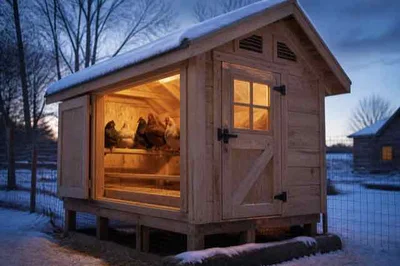
Most healthy, fully feathered chickens do not need a heated coop in late winter; they need a dry, well-ventilated, draft-protected place to roost. Added heat can raise fire risk and create abrupt temperature changes when birds move outdoors. Start by improving the coop itself before considering a heater.
Focus on moisture and airflow
Cold air is less troublesome than damp, stale air. Chickens release moisture through breathing and droppings, especially overnight. Ventilation placed above roost level lets humid air escape without blowing directly across resting birds. If bedding is wet or condensation is visible, improve moisture control before adding heat.
Late-winter checklist
- Keep bedding dry and remove wet patches promptly.
- Make sure the roof and walls shed rain and snowmelt.
- Keep vents clear while blocking direct roost-level drafts.
- Check that birds have enough roost space to settle comfortably.
- Provide unfrozen drinking water using equipment rated for the conditions.
When extra help may be appropriate
Very young chicks, wet or sick birds, and birds with poor feather coverage have different needs. Severe weather can also require closer observation. If heat is used, follow manufacturer instructions, keep electrical equipment away from bedding and water, protect cords, and use an appropriate safety device. Never rely on a household heat source not designed for livestock housing.
A heated chicken coop is not a substitute for dry bedding, reliable ventilation, and close observation. Make those basics dependable first, then seek qualified guidance for birds with special needs.
For more seasonal poultry guidance, browse Land Life Advice.
Bottom line: a sound coop manages cold by staying dry, ventilated, and protected—not by being sealed up or automatically heated.