
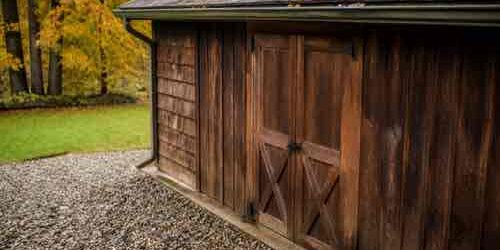
Before fall rains, inspect a shed’s roof, doors, siding, base, drainage, and stored items so small leaks or runoff problems do not become floor or framing damage. Start outside, where most water problems begin, then inspect the interior for early signs of moisture.
Check the weather-facing parts
Look for loose roofing, damaged flashing, failed seals, cracked siding, missing trim, and doors that no longer close squarely. Clear roof valleys, gutters, and the ground around the shed of leaves that block water flow. Keep soil, mulch, and dense vegetation from holding moisture against walls.
Inspect the base and interior
- Confirm surrounding grade moves water away from the shed.
- Check the gravel or foundation area for settlement, washout, and standing water.
- Look for stains, soft flooring, musty odor, or damp stored items.
- Raise moisture-sensitive items off the floor when practical.
- Maintain ventilation and close gaps that admit rain or pests.
Repair small leaks, loose hardware, and drainage failures promptly. If you see structural rot, major settlement, or repeated water intrusion, get qualified local help rather than covering the symptom.
Bottom line: an early fall inspection protects both the shed and the tools or seasonal gear stored inside it.