
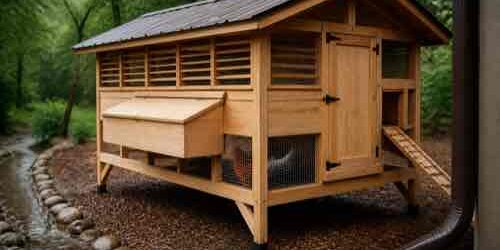
Keep a chicken coop dry during fall rains by managing roof runoff, maintaining ventilation, fixing leaks early, and keeping bedding and access paths out of standing water. Dampness is more harmful than cool air in a coop; water should leave the building and run rather than soaking into the floor or bedding.
Work from outside in
Inspect the roof, flashing, walls, door thresholds, and ground around the coop after rain. Make sure downspouts, drip lines, and uphill flow do not dump water at the base. Repair ruts and low areas near the entrance before they become persistent mud.
Keep the interior dry
- Remove wet bedding rather than covering it with more dry material.
- Place waterers where spills will not soak the sleeping area.
- Keep vents open enough to release humid air above roost level.
- Check nesting boxes and corners for leaks or condensation.
- Store replacement bedding in a protected dry location.
Do not close every opening in an attempt to keep rain out; a sealed coop traps moisture. If water repeatedly enters through the base or structure, correct the drainage or repair before cold weather makes the problem harder to manage.
Bottom line: dry bedding, managed runoff, and usable ventilation keep a coop healthier through wet fall weather.