
LAND & LIFE ADVICE
How Do You Keep a Chicken Run From Turning Into Mud?
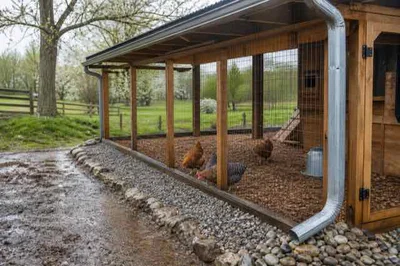
To keep a chicken run from turning into mud, control the water before adding footing. A run stays wet when roof runoff, uphill flow, poor grading, and repeated traffic all feed the same problem. Loose bedding or gravel placed over saturated ground can help temporarily, but it will not solve a site that continues to collect water.
Find the source of the water
Walk the run during or after rain. Look for downspouts, roof drip lines, low edges, ruts, and water flowing from higher ground. The goal is to keep runoff moving around the run and away from doors, feeders, and water stations.
Reinforce the busiest areas
- Cover or harden the zone immediately outside coop doors.
- Give water and feed stations a stable, cleanable surface.
- Use a covered area so birds have dry ground during rain.
- Maintain edges and drainage paths so material stays where it belongs.
- Remove saturated organic material rather than repeatedly piling dry material on top.
Choose materials for your conditions
Suitable surfaces depend on soil, climate, run design, and how often you clean. The safest choice is one that drains, does not create sharp hazards, and can be refreshed without trapping moisture. Avoid using treated-wood scraps, unknown construction waste, or materials that create persistent dust or standing water.
Chicken run mud is easiest to control when you correct runoff and high-traffic areas before the wet season becomes routine. Check the run again after each significant rain and adjust the problem spot early.
For more practical chicken-run guidance, browse Land Life Advice.
Bottom line: start with drainage and roof runoff, then use cover and durable footing where chickens naturally concentrate.