
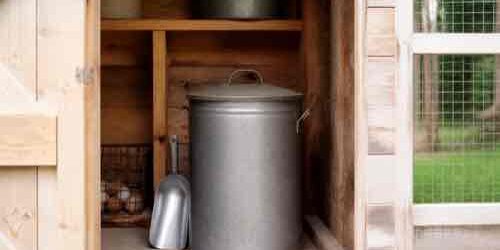
Keep feed dry and away from rodents by storing it in sealed, rodent-resistant containers, cleaning spills promptly, keeping the storage area dry, and removing the easy food and shelter that attract pests.
Keep feed dry with storage that works in the real location
Move feed from torn or open bags into durable containers with secure, tight-fitting lids. Choose a storage location that stays dry, is easy to sweep, and is not directly below a roof leak, beside a damp wall, or on bare ground that holds moisture. Raise containers off a damp floor when practical and label them so older feed is used first.
Do not mix fresh feed into material that smells musty, feels damp, or shows signs of spoilage. Check the container seams and lid each time you refill it. A clean, dry container protects feed quality and makes it easier to spot a new problem before it becomes an infestation.
Reduce the rodent attractants around poultry feed
- Feed only an amount birds can reasonably eat in the available time.
- Clean spilled feed around the coop, run, and storage area promptly.
- Keep brush, stacked materials, and clutter from creating rodent cover near the feed zone.
- Repair accessible gaps and holes in storage areas, coop walls, and feed-room doors.
- Fix water leaks and move bowls or waterers that repeatedly soak the feed area.
Inspect before choosing a control method
Look for droppings, chew marks, nesting material, burrows, and feed that disappears faster than expected. Choose any control method carefully around poultry, pets, children, and wildlife, and follow product labels exactly. For a persistent infestation, use a qualified local pest professional rather than introducing a hazard around animals or feed.
For more chicken-coop and rural-property guidance, browse Land Life Advice.
Bottom line: Keeping feed dry is most effective when sealed storage, spill cleanup, moisture control, and regular inspection all work together.