
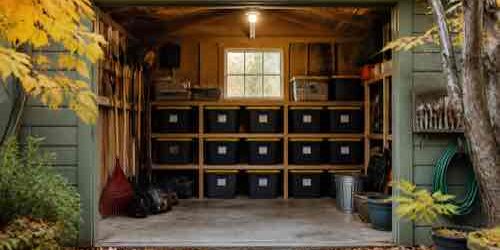
Plan outdoor storage before fall by taking inventory, protecting items from moisture and pests, separating daily-use tools from seasonal gear, and keeping access clear. Early planning prevents a shed, porch, or garage from becoming a crowded pile when weather changes and equipment needs shift.
Sort by season and frequency
Group summer-only gear, fall and winter tools, daily-use items, and long-term storage. Clean and dry items before putting them away, then place the tools you will use most in the easiest-to-reach zones. Keep a clear central path rather than filling every floor space.
Protect the stored items
- Use sealed containers for items vulnerable to moisture or rodents.
- Store fuel, chemicals, and batteries according to their labels and away from incompatible items.
- Keep fabric, cushions, and wood décor dry before covering or storing.
- Raise sensitive items off damp floors where practical.
- Inspect the shed or storage area for leaks, pests, and damaged shelves.
Make the plan realistic
Do not store more than the space can hold safely. If an item is broken, unused, or beyond repair, decide whether it should be repaired, recycled, donated, or disposed of through an appropriate local option. Label bins so the system stays useful next season.
Bottom line: fall storage works when it protects what you need and leaves enough access to use the space every day.