
LAND & LIFE ADVICE
How Do You Prepare a Chicken Run for Mud Season?
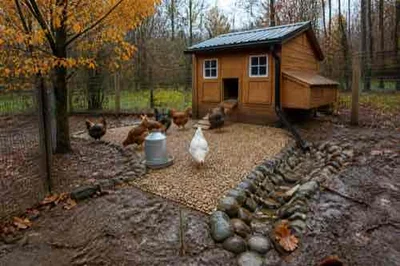
Prepare a chicken run for mud season by controlling roof runoff, protecting the highest-traffic spots, and keeping feed and water from creating wet patches. The best time is before frequent fall rain turns the ground into packed mud.
Start with a quick site check
Start with drainage. Gutters or simple roof runoff control can keep a surprising amount of water out of a run. Locate the wettest corner after rain, then remove leaves that block its exit path. In high-traffic areas such as the coop door, feeder, and waterer, use a firm, poultry-appropriate surface or dry footing material that suits the run design.
Practical steps to take now
- Move waterers often enough that spills do not create a permanent muddy ring. Refresh soiled bedding promptly and provide a dry, sheltered area where birds can scratch and rest. Avoid sealing a run so tightly that airflow and drainage disappear; the aim is drier footing, not a damp enclosure.
Avoid the common shortcut
Work from the cause of the problem, not only its visible symptom. Seasonal maintenance is most effective when water flow, access, and safe use are considered together. Make one change at a time and recheck after ordinary rain or use so you can tell what solved the issue.
Bottom line: a chicken run for mud season by controlling roof runoff, protecting the highest-traffic spots, and keeping feed and water from creating wet patches. The best time is before frequent fall rain turns the ground into packed mud.