
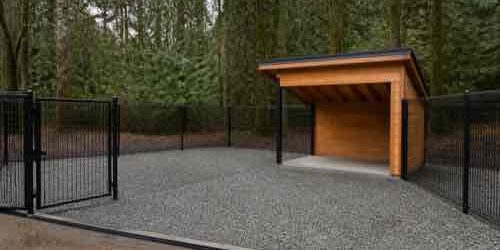
Prepare a dog kennel for colder, wetter weather by fixing drainage, providing a dry shelter, inspecting the structure, and planning a clean resting area before persistent rain arrives. The goal is not to seal a dog into a damp enclosure; it is to create a protected, cleanable space with appropriate airflow and supervision.
Start outside the kennel
Watch where water crosses the area after rain. Redirect roof runoff and surface flow away from the fence and shelter, repair ruts, and address low spots before adding fresh bedding. A dry kennel depends on grade and drainage beyond the enclosure as much as the floor inside it.
Inspect the shelter and surface
- Check roof, panels, latches, anchors, and gates for damage.
- Provide a raised or otherwise dry resting zone suited to the dog.
- Use safe, cleanable footing and remove saturated bedding promptly.
- Keep water protected from contamination and freezing conditions as needed.
- Maintain ventilation without exposing the resting area to direct wind-driven rain.
Adapt care to the dog and weather
Age, coat, health, activity level, and local conditions all affect what a dog needs. Kennel shelter does not replace regular exercise, monitoring, or moving a dog to a more climate-appropriate space during severe weather. Consult a veterinarian for individual health concerns.
Bottom line: dry ground, sound shelter, clean bedding, and daily observation make a kennel far more usable when weather turns wet and cold.