
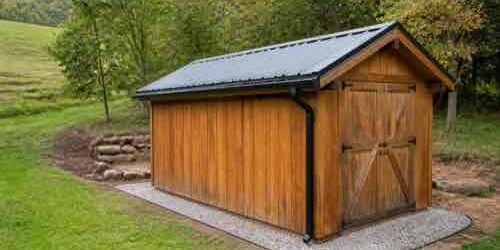
Protect a shed from water damage by managing grade, roof runoff, base drainage, ventilation, and regular inspections. Most water damage starts outside the walls: water held against the base, gutters that dump beside the structure, and ground that slopes inward all shorten the life of flooring, siding, and stored items.
Keep water moving away
Maintain a level, appropriate base and surrounding grade that directs surface water away from the shed. Use gutters or other runoff management when appropriate, and discharge water where it will not return toward the base or create a problem for adjacent property.
Inspect common trouble spots
- Check roof edges, flashing, doors, windows, and siding for gaps or damage.
- Look beneath stored items for damp floors, staining, or musty odor.
- Keep vegetation, soil, and mulch from holding moisture against the walls.
- Maintain ventilation so interior moisture can escape.
- Store items on shelves or raised surfaces when site conditions warrant it.
Fix small issues early
Repair leaks, loose trim, damaged seals, and drainage failures before they affect framing or flooring. Follow manufacturer guidance for finishes and foundation requirements. If structural rot, major settlement, or persistent water intrusion is present, get qualified local help.
Bottom line: a shed stays dry when water has no easy path to the base, roof, walls, or stored contents.