
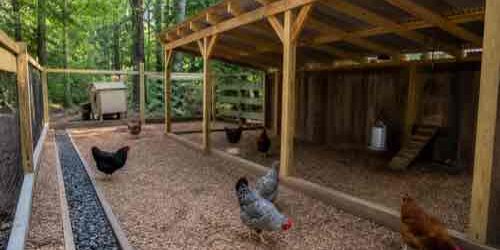
Before fall rains start, restore drainage, repair high-traffic footing, check cover and fencing, and make sure chickens have a dry place to stand and access water. A run that handled summer well can become muddy quickly when rain, lower sun, and worn ground combine.
Fix water flow before the first long wet spell
Trace roof runoff, uphill flow, low spots, and areas that remain damp after storms. Keep water moving around the run rather than through it. Repair ruts and manage downspouts before adding new surface material, or the new material will simply become part of the mud.
Refresh the working areas
- Stabilize the ground near doors, feeders, waterers, and favorite shade spots.
- Provide a covered, dry section of run with usable airflow.
- Inspect wire, latches, roof panels, and ground edges for predator entry points.
- Remove saturated organic debris and store dry bedding where it stays protected.
- Keep access paths safe for daily chores after rain.
Use rain as a test
Check the run after the first substantial storm and correct problems while conditions are manageable. Watch flock behavior: birds crowding the coop or avoiding parts of the run can signal that footing, cover, or drainage needs attention.
Bottom line: a fall-ready run is drained, secure, covered where it matters, and easy to maintain when weather is wet.