
LAND & LIFE ADVICE
How Do You Protect a Shed Door From Weather Damage?
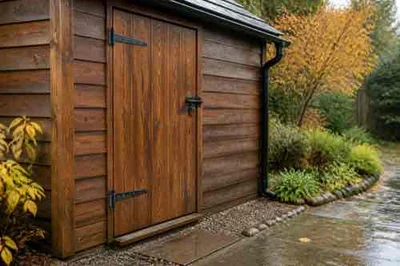
Protect a shed door from weather damage by keeping water away from the threshold, maintaining sound finish and hardware, and correcting alignment problems before swelling, freezing, or wind-driven rain make the door difficult to use.
Protect a shed door by starting with water flow
Inspect the roof edge, gutters, and nearby downspout before focusing on the door itself. Water that splashes onto the threshold or pools beside the base can shorten the life of wood and hardware. Clear debris from the threshold, check that the ground slopes away, and note puddles or splashback after rain.
Shed door weather-damage checklist
- Clear leaves and debris from the threshold and nearby drainage route.
- Check roof runoff and downspouts for water directed at the door or shed base.
- Inspect hinges, screws, latch, weather stripping, and visible finish wear.
- Clean and dry sound wood before using a compatible exterior maintenance coating.
- Open and close the door gently; do not force a swollen, frozen, or misaligned door.
Find the cause before changing the door
Do not plane, wedge, or force a door until you understand whether moisture, a shifting base, loose hardware, or an alignment issue caused the change. Weather stripping can help only after the door is aligned and the water problem is addressed. Make one correction at a time, then recheck after ordinary rain or use.
For more shed-care guidance, browse Land Life Advice.
Bottom line: A weather-protected shed door closes smoothly because water, drainage, hardware, and alignment have all been addressed.