
LAND & LIFE ADVICE
DIY wooden hooks for towels, hats, and lake gear
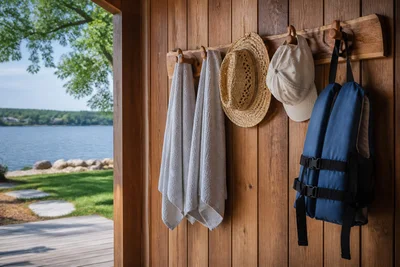
A simple row of wooden hooks can solve one of the most common porch and entry problems: wet towels, hats, bags, and outdoor layers need a place to land before they become a pile on a chair. The best version is not complicated. It is a sturdy board, sensible hook spacing, secure mounting, and a finish that suits the location. Build it for the items that actually come through the door after a lake day, a garden task, or an afternoon outside.
Measure the gear before laying out the hooks
Start with the bulkiest item you expect to hang. A baseball cap needs little space, while a thick towel, life jacket, or wet bag can crowd the next hook if the spacing is too tight. Mark the board with the real objects nearby, then adjust before drilling. A row that looks evenly spaced on a workbench may not work once it holds a towel and two hats. Keep the overall height appropriate for the people using it, and leave room below for items that hang long.
Choose mounting that matches the wall
Hooks carry more weight than they first appear to, especially when wet gear is added to the mix. Locate framing or use a solid backer rather than relying on a light wall surface alone. If the rack will live in a porch room, mudroom, or dock area, choose fasteners and hardware that can handle humidity. Round the exposed edges of both the board and hooks so towels and straps do not catch, then test each hook with a realistic load before calling the project finished.
- Space hooks according to the widest items, not the smallest ones.
- Use sturdy fasteners anchored to framing or another solid support.
- Sand all edges and hook profiles before applying a finish.
- Mount the rack where wet gear can dry without blocking a main walkway.
Make cleanup easier after time outside
A hook rack works best when it supports the return-home routine. Hang towels where air can reach them, give hats a predictable place, and keep bags off the floor where grit and moisture collect. The same practical approach appears in a simple wooden caddy for lake-day snacks and supplies, where a small handmade piece helps the useful items stay together instead of moving through the house.
When a piece of woodcraft solves a repeated problem, it becomes part of the space rather than another decoration to dust. The useful hooks, trays, and outdoor-minded pieces in the LOZ Woodworking shop are made around that same idea: practical materials, simple forms, and details that hold up to daily use.
Use reliable sources for material decisions
Humidity, movement in wood, and finish selection all affect a rack that will live near outdoor gear. The USDA Forest Products Laboratory provides research-based information on wood performance and durability when a project needs more than a basic material choice.
For porch and household planning that changes with Missouri weather, the University of Missouri Extension offers practical guidance on home, garden, and seasonal care. Use dependable information for the details, then make the final design decision based on the wall, gear, and routine in front of you.
Finish for the location, not the showroom
A rack near a screened porch or dock room will see different conditions than one in a dry hallway. Clean the wood thoroughly before finishing, follow the product directions, and allow enough curing time before hanging damp items. A simple clear finish may be enough for a protected indoor rack, while a more durable option can be useful where humidity and changing temperatures are common. Inspect the rack at the start of each season and tighten hardware before it becomes a problem.
Let the rack earn its place
Use the hook rack for a few weeks before deciding whether it needs another hook, a lower row for children, or a small shelf above it. The first real lake day or rainy garden afternoon will show whether the spacing works and whether the location makes people want to use it. A simple rack that keeps wet gear off the floor and ready for the next outing is already a successful project.