
LAND & LIFE ADVICE
DIY wooden produce risers for a farmers-market-style kitchen
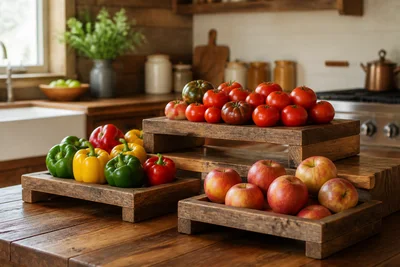
Wooden produce risers can make a kitchen work better without taking up much space. By lifting fruit, onions, or pantry staples a few inches above the counter, they make food easier to see and use before it gets forgotten. A simple set can also create a more useful market-style display for a small gathering, a porch table, or a weekend meal at the lake. The project does not need fancy joinery. It needs a stable shape, smooth surfaces, and a finish chosen for the way the risers will actually be used.
Design around the counter or table you already have
Measure the surface before choosing a size. A riser that is too tall can make produce hard to reach, while one that is too wide can crowd a small kitchen. Two or three nesting sizes usually work better than one large platform because they can be rearranged for different meals and stored together afterward. Think about the containers that will sit on top: a shallow bowl of apples needs a different footprint than a basket of tomatoes or a row of jars.
Use clean, simple materials
Choose untreated wood that is straight, dry, and free of loose knots. Small hardwood offcuts can work well, though cedar or pine may be appropriate for a decorative riser that will not hold unwrapped food. Cut the top and legs square, then sand every edge until it feels comfortable in the hand. Test the riser on a flat surface before finishing it. If it rocks even slightly, correct the feet before adding a stain, oil, or clear coat.
- Build low profiles so the risers stay stable when loaded with bowls or baskets.
- Make nesting sizes that store together when the counter needs to be clear.
- Use a food-safe finish when unwrapped produce may touch the wood.
- Add felt pads only if the risers will be used on a dry indoor surface.
Make the display support everyday food use
The value of a produce riser is not simply that it looks good. It keeps the food you already bought in view, which makes it easier to plan meals and reduce waste. The same practical kitchen idea appears in keeping fresh produce useful instead of forgotten, where small placement changes help a household notice what should be used first.
If a hand-built kitchen piece saves time every day, it earns its place. The cutting boards, trays, and handmade woodcrafts in the LOZ Woodworking shop are designed around that kind of use: durable enough for ordinary routines and simple enough to fit naturally into a working home.
Check finish and material choices carefully
Wood selection and moisture management affect whether a small project stays stable over time. The USDA Forest Products Laboratory offers reliable information about wood behavior, finishes, and durability when you need to make a material decision beyond a basic weekend build.
When the risers are used around food, clean them with a damp cloth and mild soap rather than soaking them. The University of Missouri Extension is a useful source for food-handling and home-care guidance when storage and surface choices affect what people eat or serve.
Use the risers as a daily reminder
Before filling the display, wash and dry produce as appropriate for the way it will be stored, and check it every day or two. Place the ripest fruit and most perishable items where they are easiest to reach, then keep long-keeping onions or potatoes in a separate, cooler location. The riser should support a rotation, not become a place where food sits unnoticed. If the counter is crowded, use only one level for a week and let the actual pace of meals determine whether a larger display is useful.
Keep the project useful through the season
Use the risers for the produce that is currently coming into the kitchen, then change the arrangement when the season changes. In summer they may hold tomatoes, peaches, and herbs; in winter they may keep onions, citrus, or baking supplies visible. A small woodworking project becomes more valuable when it adapts to ordinary life. Build the first set simply, live with it for a while, and let daily use show whether the next version needs another size, a lower profile, or nothing more at all.