Cool-Season Vegetables That Work Well in Containers
The first vegetables of the year do not have to wait for tomato weather. In the Lake of the Ozarks area, cool-season crops are often the most satisfying container plants because they grow while the days are mild and the summer rush has not started. They let you use a deck, porch, patio, or small raised box for something productive before heat, insects, and watering demands become the main event. The same practical approach can carry into A container garden plan before spring arrives, where small adjustments to light, water, and setup make the next step easier.
The key is choosing crops that genuinely enjoy cool soil and giving them a container that stays evenly moist. A sunny spot is helpful, but spring greens can do well with less intense light than peppers or tomatoes need. Start with a few crops you will eat often, then add more only after you learn how your particular location handles wind, rain, and afternoon sun.
Choose vegetables that match the early season
Keep harvests coming
Grow what you will actually eat
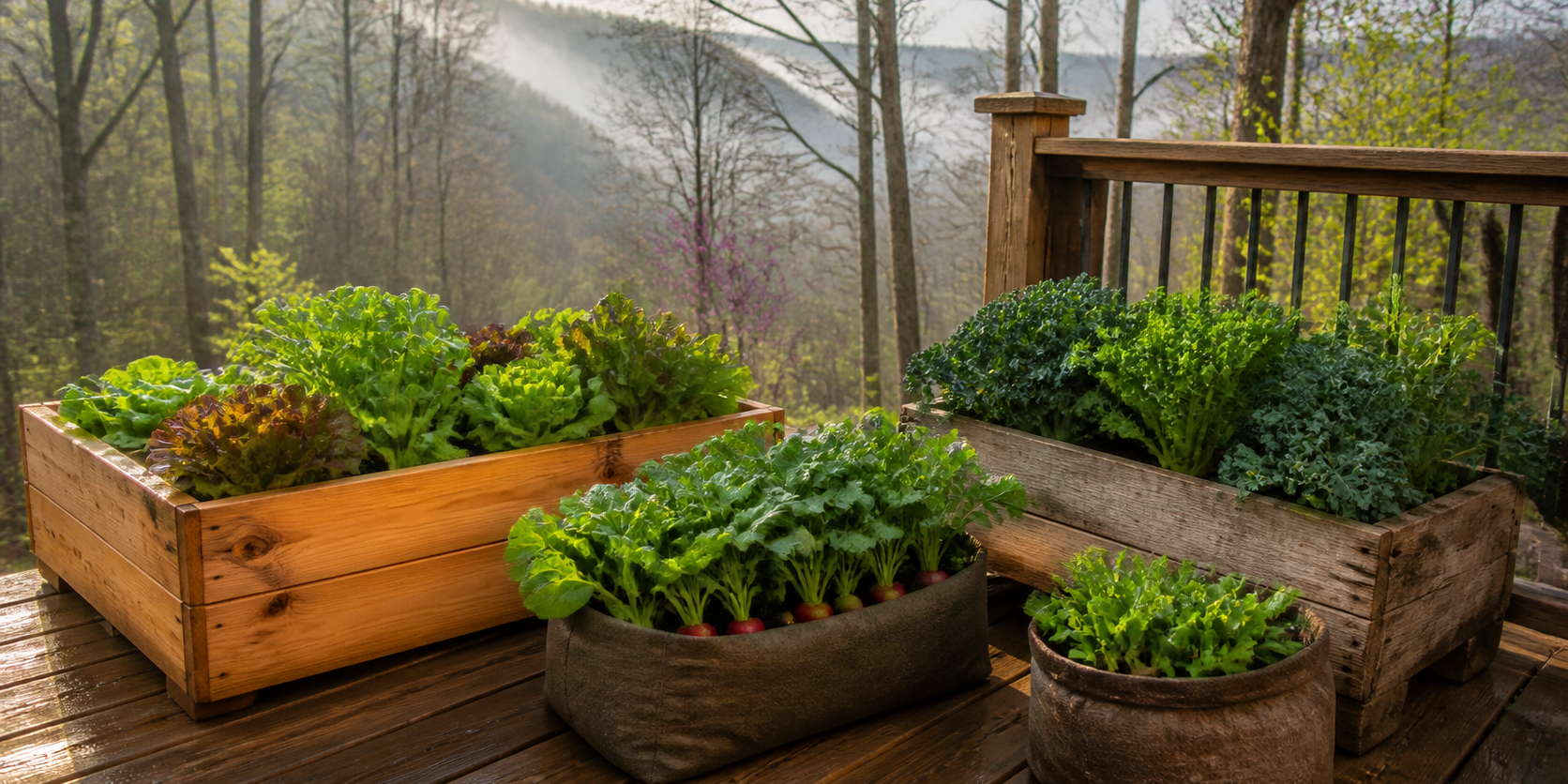
Leaf lettuce is one of the easiest places to begin. It grows quickly, does not need a deep pot, and can be harvested a few leaves at a time instead of all at once. Spinach, arugula, kale, and Swiss chard also earn their space in containers. Radishes are fast and compact, while peas can climb a small trellis if the container is deep enough. Green onions and parsley are useful choices for cooks who want a steady harvest without a big garden footprint.
It helps to think in terms of containers rather than individual plants. A wide, shallow planter can hold a mixed bowl of loose-leaf lettuce, arugula, and radishes. A deeper pot can grow kale or chard with a few green onions at the edges. Peas deserve a container of their own with a support added at planting time. This keeps the plants from competing too hard and makes harvesting easier when the weather turns pleasant.
Give roots room and water a consistent routine
Most greens are happy in a container that is at least eight to ten inches deep, but deeper pots are more forgiving because they hold moisture longer. Fill the container with a quality potting mix rather than heavy soil from the yard. Potting mix drains better and does not compact as quickly after spring rain. Check that every container has drainage holes; vegetables need moisture, but roots sitting in water are an invitation for problems.
Water when the top inch of soil feels dry, not by the calendar. A breezy deck can dry a pot much faster than a sheltered patio, even when the temperature is still cool. Water the soil rather than the leaves, and do it early enough in the day that damp foliage can dry. A thin layer of untreated mulch or clean straw can help keep the top of the pot from drying out too quickly.
Choose crops for your table. A short list of vegetables you use is more valuable than a crowded collection of novelty plants. Plant in small rounds. For a practical setup before seedlings arrive, see A container garden plan before spring arrives.
- Use wide planters for lettuce, arugula, and radishes.
- Save deeper pots for kale, chard, and peas.
- Plant a small trellis with peas at the beginning, not after they sprawl.
- Harvest outer leaves of greens regularly to keep new growth coming.
- Protect young plants on a cold night with a light cover or by moving small pots close to the house.
Plant in small rounds instead of all at once
One reason container gardening works so well is that you can plant a little, wait a week or two, and plant a little more. This is especially useful with lettuce and radishes. A small sowing every ten to fourteen days creates a steadier harvest than one oversized planter that all matures at once. If a late cold snap arrives, a few extra seeds are much easier to replace than an entire garden bed.
Pay attention to what happens when temperatures rise. Lettuce and spinach can become bitter or bolt quickly once spring turns hot. When that happens, pull the tired plants, refresh the top layer of potting mix, and use the container for warm-season herbs or flowers. That simple handoff keeps a container useful through more of the year without demanding that every plant perform in every month.
For regional growing information that can help refine crop and timing choices, University of Missouri Extension is worth consulting before making a final decision.
Use a container setup you will maintain
The best growing arrangement is the one you can reach without making it a project. Put greens near the kitchen door if you want to use them for meals. Keep a watering can nearby, and leave enough space between containers to see what needs attention. If you prefer a more structured option for growing close to the house, our custom Kratky method planter boxes are designed around practical food-growing in a compact footprint.
For plant-specific guidance and seasonal recommendations, the University of Missouri Extension container gardening reference is worth keeping handy. It is not about chasing a perfect garden. It is about matching a few useful crops to the real conditions outside your door.
Cool-season vegetables reward a simple approach. Start with greens you like, keep the pots watered and easy to reach, and harvest often. By the time warmer crops are ready to move outside, you will already have a container-garden routine that works for your home.