
LAND & LIFE ADVICE
Kratky herbs for busy households
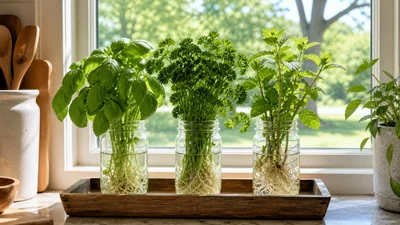
Fresh herbs are one of the easiest ways to make a small growing setup feel worthwhile. A few leaves of basil, parsley, chives, or cilantro can change an everyday meal, and they are far more likely to get used when they are growing close to the kitchen. For busy households, a small Kratky setup can be a practical way to keep herbs growing without the daily watering schedule that soil containers often demand. The same practical approach can carry into Spring container gardening: what to plant first, where small adjustments to light, water, and setup make the next step easier.
The Kratky method is a passive form of hydroponic growing. Instead of circulating water with a pump, a plant sits above a nutrient solution and develops roots into the reservoir. As the water level drops, the plant gains an air space around part of its root system. That makes the method simple, but it still works best when the container is clean, light is controlled, and the herbs are chosen with the setup in mind.
Choose herbs that make sense for the system
Keep the reservoir out of direct light
Choose one herb to learn the method
Basil is usually the easiest herb to begin with. It grows quickly in bright light and responds well to regular harvesting. Parsley can also work, though it may take longer to establish. Cilantro is possible but tends to bolt quickly in warmth, so it is best treated as a cool-season experiment rather than a long-term houseplant. Chives can grow well in a larger setup, while woody herbs such as rosemary and thyme are generally happier in well-drained soil.
Start with one herb per container. Mixing several herbs in a small reservoir makes it harder to adjust light, nutrient strength, and spacing when one grows faster than the others. A single healthy basil plant teaches more about the method than a crowded arrangement that becomes hard to manage.
Use a light-blocking reservoir and steady light
Sunlight on the leaves is useful; sunlight in the water is not. Cover the reservoir or use an opaque container to reduce algae. A small jar can work for a trial if it is wrapped, but a purpose-built opaque container is more reliable. Keep the plant in bright light near a window or under a suitable growing light, and rotate the container only when needed so growth stays even.
Herbs need room above the water as they grow. Avoid topping the reservoir back up to the original level every time it drops. The air gap is part of the Kratky process. Check roots and water level regularly, but resist the urge to tinker with the system every day.
Start with one dependable herb. A simple basil setup is easier to learn from than a crowded assortment. Let the roots tell you what they need. For the foundational system, see The simple Kratky method for first-time gardeners.
- Begin with basil or parsley in a clean, light-blocking container.
- Use a hydroponic nutrient formulated for edible plants.
- Keep one herb per reservoir when you are learning.
- Let the air gap develop as roots reach into the solution.
- Harvest often and pinch basil above a leaf pair for fuller growth.
Keep the setup close to the kitchen
A growing system only saves time if it fits into the household routine. Place herbs where they are easy to see while cooking, but not where they will be knocked over or overheated by a vent. A sunny counter, windowsill shelf, or protected porch can work. Keep a pair of clean kitchen snips nearby so harvesting becomes normal rather than a separate task.
Use herbs gradually. With basil, remove a few leaves or a growing tip at a time. With parsley, take outer stems and let the center keep growing. Regular, light harvesting encourages new growth and keeps the plant from becoming leggy. If leaves begin to pale or growth slows, review the light, nutrient mix, and water temperature before adding more fertilizer.
For additional home-growing information for herbs and small spaces, University of Missouri Extension is worth consulting before making a final decision.
Make the method work for your actual schedule
A passive herb setup is not maintenance-free, but it can be low-maintenance. Check the water level, look for algae or root discoloration, and make sure the plant still has adequate light. A busy week should not mean losing the whole crop because one small pot dried out on a hot windowsill. That is where a stable reservoir can be helpful.
If you would rather have a sturdy growing feature built for your space, our custom Kratky method planter boxes are designed around practical home use. The University of Missouri Extension is also a useful reference for the basics of growing herbs in containers and small spaces.
Keep the first setup simple: one herb, one reservoir, good light, and a routine that fits your kitchen. A handful of fresh herbs available when dinner is being made is a small benefit, but it is the kind of practical success that makes home growing worth continuing.