
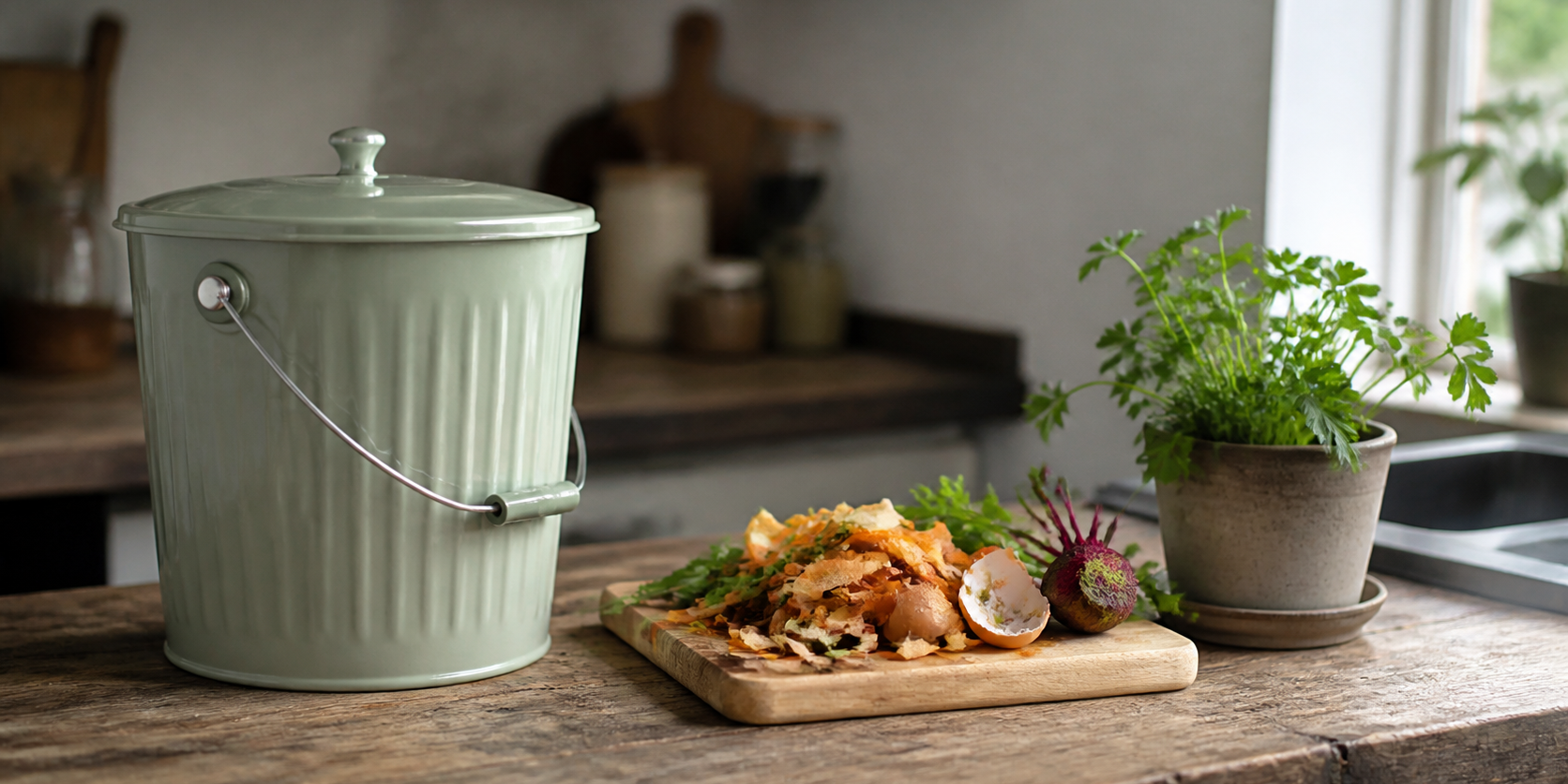
How to Start a Kitchen Compost Bucket Without Overthinking It
A kitchen compost bucket does not have to be a complicated system with special equipment and perfect ratios. It can be a simple holding spot for vegetable scraps until you are ready to add them to an outdoor pile, a tumbler, or a garden compost area. The goal is to keep useful organic material out of the trash without turning your counter into a smelly science experiment. The same low-waste, practical thinking also supports A simple home routine for keeping porch dust under control, where a few repeatable habits help a home feel easier to manage.
For most households, the easiest setup is a small container with a lid placed somewhere convenient: under the sink, beside the back door, or in the refrigerator or freezer if you want to eliminate odor between trips outside. A bucket works, but so does a repurposed container with a tight-fitting lid. Choose a size you can empty regularly. A small container emptied twice a week is easier to manage than a large one that becomes a problem before you get to it.
Know what belongs in the bucket
Balance fresh scraps with dry material
Keep the collection container manageable
Fruit and vegetable trimmings, coffee grounds, tea leaves, crushed eggshells, and small amounts of plain plant material are easy compost ingredients. Avoid meat, dairy, oils, heavily seasoned food, and anything that may attract animals or create a bad smell. Paper towels and uncoated paper can be added in moderation, especially if your pile needs more dry material, but glossy or heavily printed paper is better left out.
Think of the kitchen bucket as a collection point, not the place where compost is finished. The actual breakdown needs air, a mix of green and brown materials, and time. When you empty the bucket outside, add dry leaves, shredded cardboard, or clean wood chips along with the fresh scraps. That balance keeps the pile from turning wet and compacted.
Keep odor and mess under control
Odor usually means the bucket is sitting too long or holding too much wet material. Empty it more often, keep the lid closed, and rinse the container after each trip outside. If you do not have an outdoor pile yet, store scraps in a sealed bag or container in the freezer until you are ready to start one. Freezing is not glamorous, but it is practical and keeps small spaces clean.
Make the routine easy enough to repeat. A small container emptied regularly beats a complicated setup that gets ignored. Think beyond the bucket. Finished compost has a natural place in A container garden plan before spring arrives.
- Collect fruit and vegetable scraps, coffee grounds, and eggshells.
- Skip meat, dairy, grease, and heavily seasoned leftovers.
- Empty a small container regularly rather than letting it overfill.
- Add dry leaves, shredded cardboard, or other browns when you empty it.
- Rinse the container before returning it to the kitchen.
Choose a simple outdoor destination
A basic compost pile can be a contained bin, a wire ring, a tumbler, or a quiet corner of the yard where materials can break down. Keep it away from the house and where water will not collect. Layer kitchen scraps with dry brown materials, and turn the pile occasionally if you want it to break down faster. You do not need to obsess over every layer; you just need enough dry material to keep air moving through the pile.
Compost is especially useful for container gardening because it adds organic matter to growing mixes and can help make a new planter feel less dependent on bagged products. Use finished compost, not fresh kitchen scraps, in a pot. Fresh scraps need time to decompose fully before they belong around the roots of herbs or vegetables.
For a dependable reference for the larger composting system outside the kitchen, EPA’s home-composting guidance is worth consulting before making a final decision.
Let the system fit your household
If the bucket is always full, use two containers or make a more frequent emptying routine. If it never fills, that is fine too. A small amount of compostable material is still worth using. The system should feel like a normal part of cleaning up after meals, not a rule that makes cooking harder.
Once you have compost ready, it can support a small food-growing setup close to home. Our custom Kratky method planter boxes are designed around practical growing spaces, while the University of Missouri Extension offers useful information on compost and garden soil for Missouri homes.
Start with a clean container, keep only the right materials in it, and empty it often. That is enough to build a compost habit that works in a real kitchen and eventually gives something useful back to the garden.