
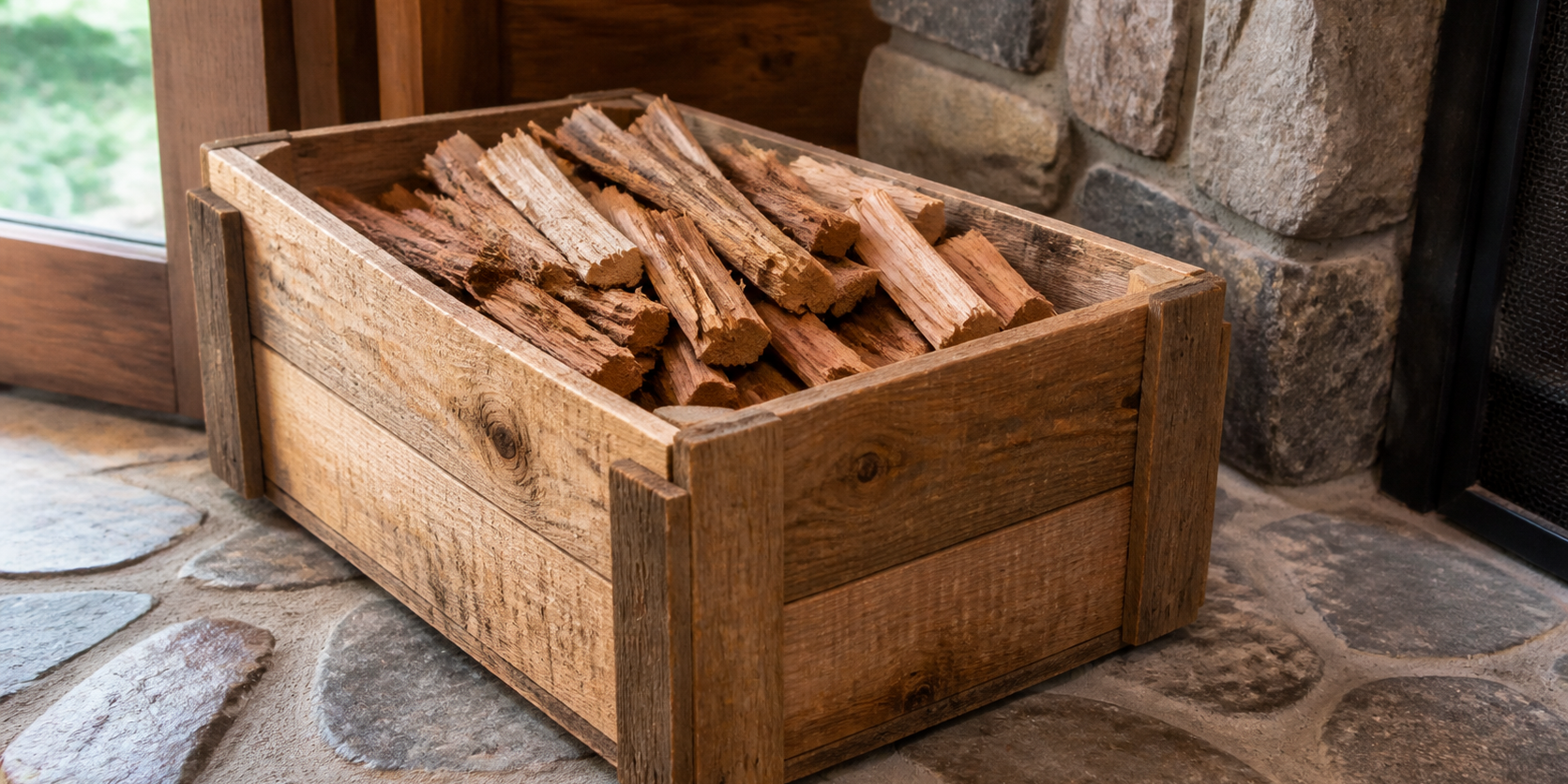
A DIY Firewood Kindling Crate from Reclaimed Boards
A kindling crate is a small woodworking project with a real job to do. It keeps fire-starting material off the floor, makes it easier to carry a few armloads from the woodpile, and gives short reclaimed boards a second life. It is also a good reminder that a useful project does not have to be complicated. A sturdy open crate made from sound scraps can serve a porch, cabin, workshop, or camping area for years. The same build-it-for-use mindset carries into Spring woodshop cleanup that makes weekend projects easier, where a simple design and durable materials keep the project useful.
Before cutting anything, sort the boards you have. Look for dry, solid lumber without deep rot, loose fasteners, or a strong chemical smell. Reclaimed wood often has nail holes, weathered edges, and color variation; those are part of its character. What matters is whether it will hold screws and carry weight. Avoid painted or treated mystery lumber for a crate that will sit near a fireplace or carry material you burn.
Keep the dimensions useful
Store kindling where it stays dry
Choose boards that are safe to burn near
A crate does not need to hold a week’s worth of firewood. A smaller box that can be carried when full is more practical. A footprint around twelve by eighteen inches with sides ten to twelve inches tall is a good starting point, but adjust the size to the boards you have. If the crate will live beside a stove or fireplace, measure the available space first. The best dimensions are the ones that let the crate slide into its home without becoming an obstacle.
Use slats or a small gap between bottom boards so dust and bark can fall through. That keeps the crate from becoming a tray full of debris. Side panels can be simple vertical boards or horizontal slats. Add a solid handle cutout or a small dowel handle only if it will be strong enough for the intended load. A crate that is moved regularly benefits from simple, reinforced construction more than decorative details.
Build with the wood’s imperfections in mind
Reclaimed boards are rarely perfectly square. Rather than fighting every twist and rough edge, choose the straightest boards for the base and use more character-filled pieces for the sides. Exterior or coated screws make future repairs easy, and a little pre-drilling prevents splits near old nail holes. If the wood has rough edges, sand just enough to remove splinters while keeping the weathered look.
Use reclaimed lumber with judgment. Sound untreated boards are useful; unknown coatings are not worth the risk. Give scraps a defined purpose. Before building, a quick Spring woodshop cleanup that makes weekend projects easier.
- Use sound, dry reclaimed boards with old fasteners removed.
- Keep the crate small enough to carry when it is full.
- Leave gaps in the base for bark and dust to escape.
- Use screws so repairs are simple later.
- Sand splinters away without erasing the wood’s character.
Think about how kindling is stored
Dry kindling works because it is dry. Keep the crate under cover or indoors, away from direct rain and ground moisture. If it sits on a porch, raise it slightly with small feet or blocks so air can move beneath it. Do not pack it tightly with damp pieces fresh from outside; let those dry separately before mixing them with ready-to-use material.
A kindling crate is also a good place to organize the small pieces that otherwise disappear in a woodpile: dry twigs, split cedar, pine cones if you use them, and clean untreated offcuts from shop work. Never burn painted, stained, pressure-treated, or adhesive-heavy sheet goods indoors. Good fire-starting material should be dry, simple, and free from unknown coatings.
For reliable wood-science information when you are deciding how to use reclaimed boards, USDA Forest Products Laboratory is worth consulting before making a final decision.
Make the crate earn its space
The usefulness of this project is in the routine it creates. A crate by the stove tells everyone where the next fire’s kindling belongs. A crate at the shop gives you a place for safe, burnable offcuts instead of leaving them underfoot. It can also be repurposed in warm months to carry garden tools, seed packets, or outdoor supplies.
Small projects like this are a practical way to use what a workshop already has. When you are ready to see more finished wood pieces, browse the LOZ Woodworking shop. For more Missouri-specific garden and outdoor advice, the University of Missouri Extension is a trustworthy place to continue learning.
Keep the crate simple, build it strong, and use the boards you already have wisely. The result is not just a rustic accent; it is a useful piece of storage that makes cold-weather routines cleaner and easier.