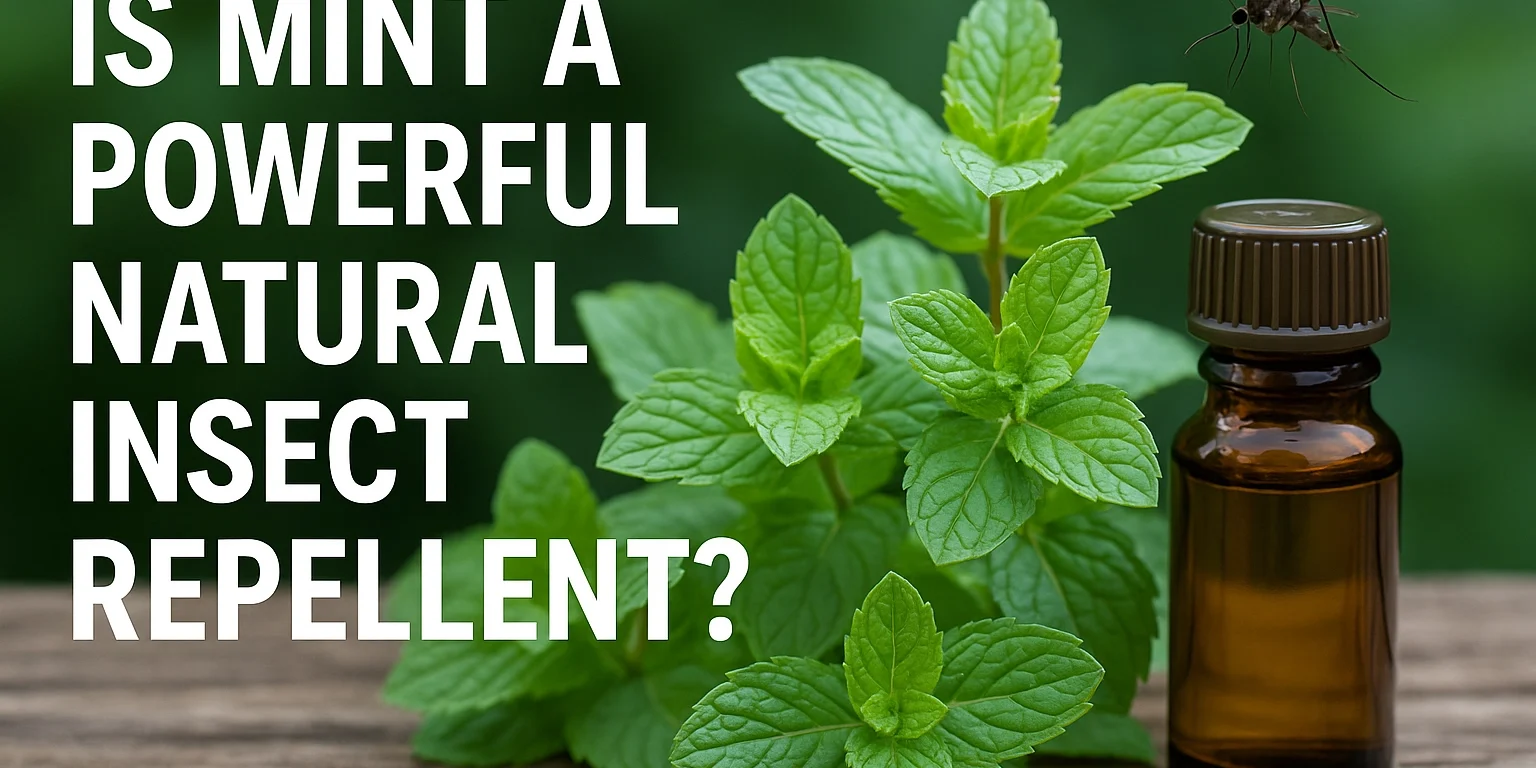
Mint smells fresh, tastes great, and pops up in countless DIY bug hacks. But is mint a natural insect repellent, or is that just wishful thinking? If you have ever wondered whether planting mint by the porch or spritzing peppermint oil can actually keep mosquitoes and ants away, you are in the right place.
In this beginner friendly analysis, we will look at what the research says about mint’s bug fighting power. You will learn which forms of mint work best, such as essential oils versus live plants, how strong the effect really is, and which insects are most likely to back off. We will break down the active compounds in mint in simple terms, why scent matters, and how long protection lasts. You will also get practical tips for using mint safely, easy starter recipes for sprays, and when to choose a proven repellent instead.
By the end, you will know when mint can help, when it will not, and how to use it smartly as part of a simple, beginner friendly strategy to keep bugs at bay.
The Rise of Natural Insect Repellents
Why natural is surging
Natural insect repellents are moving from niche to normal. In the United States, the category is projected to reach 1.13 billion dollars by 2030, a 7.9 percent CAGR from 2025 to 2030, according to U.S. natural insect repellent market projection. Concerns about DEET skin irritation and neurological effects are pushing shoppers toward plant-based blends, a shift echoed in TechSci’s analysis on health concerns with synthetic repellents. People also expect clean labels and sourcing transparency. For our community of campers, hunters, and makers, the appeal is simple. You want protection that fits a low-impact ethic and works without overpowering scent.
Mint DIY and outdoor use
Mint sits squarely in this rise, and beginners often ask, is mint a natural insect repellent. Evidence points to yes, with peppermint oil reducing mosquito attraction for about 60 minutes and spearmint for roughly 30 in lab tests. DIYers blend mint with lemon eucalyptus or citronella, but dilution matters; start near 2 to 5 percent essential oil in a skin-safe carrier. Use caution with pennyroyal, a mint species with toxic concentrated oil, see the pennyroyal toxicity profile. For the field, stack tactics: plant mint near patios, pre-treat clothing, and carry a natural spray in your pack for camping, hiking, and hunting.
Analyzing the Properties of Mint Oils
Peppermint and spearmint as actives
If you are wondering is mint a natural insect repellent, the short answer is yes, with nuance in how you use it. Peppermint oil, rich in menthol and menthone, shows strong insecticidal activity; against fall armyworm it ranked among the top performers with an LC50 near 1.74 percent, confirming true knockdown power in lab assays Insecticidal effects against fall armyworm. Beyond immediate mortality, a recent study reported measurable biological impacts of peppermint oil on storage pests across generations, reinforcing its potency as an active ingredient Scientific Reports study on peppermint oil. Spearmint oil, driven by carvone, also pulls its weight; in controlled fumigant tests, low doses as small as 2.5 microliters per liter produced high adult mortality in key stored product moths, indicating strong vapor-phase activity Fumigant toxicity of spearmint oil. In practical terms, mint oils disrupt insect olfaction and feeding, which is why you see them in modern plant-based repellents and barrier sprays.
Volatility and longevity in the field
Essential oils are volatile, which means they evaporate quickly, and that limits how long they protect. In human landing tests, undiluted peppermint has delivered complete protection for roughly an hour against some Anopheles species, with longer times reported when applied neat or supported by film-forming carriers. Translation for beginners: concentration, carrier, and environment drive performance. Look for blends that use slower-evaporating carriers, balms, or polymers, and reapply every 60 to 90 minutes when you are sweating, moving, or in wind. Practical moves include hitting pulse points and clothing edges like cuffs, hat brims, and pack straps, and keeping bottles closed tight and out of heat to preserve volatiles.
What 100 percent repellency really means
Several field trials have recorded 100 percent repellency from peppermint oil against specific mosquitoes for sustained periods, including reports of complete protection up to roughly 11 hours against Anopheles annularis when applied at high load on skin. That headline result is real, but it is conditional on species, dose, and formulation. Other controlled studies show a more modest window, with peppermint reducing mosquito attraction for about 60 minutes and spearmint for about 30 minutes in lab arenas. The takeaway is simple. Use mint as a capable repellent, then stack your odds with smart formulation or a multi-oil blend that includes lemon eucalyptus, citronella, cedarwood, or lemongrass. For passive deterrence, plant mint around seating areas to reduce pressure, then rely on a well-formulated spray or balm for on-skin protection.
Mint Oil vs. Synthetic Insect Repellents
How peppermint stacks up against synthetics
If you are asking is mint a natural insect repellent, peppermint is the mint most often tested. In head-to-head lab work with lone star tick nymphs, DEET reached 50 percent repellency at an effective concentration near 0.02 mg/cm², while essential oils, including peppermint, needed 0.113 to 0.297 mg/cm² to match that threshold, which means higher load for similar effect DEET vs essential oils in tick tests. For flying pests, peppermint has shown strong results, hitting 100 percent repellency against house flies at 0.010 μL/cm³, comparable to lemongrass, especially when delivered via functional coatings review of functional coatings for insect control. Performance is species dependent; for example, the confused flour beetle required higher concentrations for meaningful repellency, indicating limits in stored-product contexts evidence on flour beetle response. In mosquito settings, peppermint often provides about 60 minutes of reduced attraction, spearmint closer to 30 minutes, while DEET and picaridin typically protect for several hours.
Advantages for people and places
The big win with mint oil is its safety and footprint. Properly diluted peppermint oil is non-toxic to humans, biodegradable, and generally gear friendly, so it will not damage synthetics or coatings the way some chemicals can. Menthol and menthone add mild antibacterial action, useful in outdoor soaps and wipes. Mint oils have also shown acaricidal and repellent activity against house dust mites, which adds indoor utility. The market shift reflects this preference; natural repellents are projected to grow from roughly 3.1 billion dollars in 2025 to 6.5 billion dollars by 2035, driven by health awareness and sustainable choices.
The volatility tradeoff, and how to work with it
Plant oils flash off quickly, so expect to reapply every 45 to 90 minutes, faster with heat, sweat, wind, or heavy bug pressure. You can extend life by using slow-release carriers, balms with waxes and butters, or microencapsulated coatings that meter scent over time. Practice layering: apply a mint-forward blend to exposed skin, refresh pulse points and ankles, and use long sleeves, hats, and nets to reduce target area. Broaden coverage by pairing peppermint with lemon eucalyptus, cedarwood, or citronella, and keep skin dilutions around 2 to 5 percent for adults, 1 percent for kids; patch test and avoid eyes and mucous membranes. Around camp or home, plant mint near seating and entry paths as a gentle perimeter, but do not rely on plants alone when mosquitoes are intense. For long backcountry hauls or disease risk, synthetics may be the practical choice; for everyday use, mint-based formulas offer clean, responsible protection.
Practical Uses of Mint Oil Insect Repellents
DIY peppermint setups for home and trail
For quick home protection, mix 15 drops of peppermint oil with 1 cup of water and a half teaspoon of mild soap, then mist door frames, window tracks, and tent zippers. Add 10 drops peppermint to a 50-50 blend of witch hazel and water for a simple skin spritz; reapply every hour in heavy bug pressure, which aligns with lab results showing peppermint reduced mosquito attraction for about 60 minutes while spearmint held for roughly 30 minutes. For packable coverage, melt 2 tablespoons beeswax with 2 tablespoons coconut oil, then blend in 20 drops peppermint and 10 drops lemon eucalyptus; pour into tins for ankle and wrist application. Gardeners often run a perimeter spray around patios and coop edges using 20 drops peppermint per quart of water to discourage ants and flies, and the same mix can freshen gear bins where dust mites are a concern. For more recipe ideas, compare these guides: Natural Insect Repellent Recipes, Homemade Peppermint Oil Mosquito & Bug Repellent, and DIY Mosquito Repellent Recipes. Always spot test diluted oils on skin and fabrics first.
Peppermint-forward options in NO-Ski-TO
Our NO-Ski-TO line uses plant-based actives in sprays, balms, soaps, and wipes. Select blends feature peppermint alongside cedarwood, citronella, lemon eucalyptus, and other oils to widen the scent barrier against mosquitoes and camp pests. For beginners, start with a spray on outerwear and hat brims, then add a balm to pulse points for layered protection. Reapply every 45 to 90 minutes based on sweat, wind, and mosquito density. The shift to mint-driven, natural repellents tracks the broader market, which is projected to grow from 3.1 billion dollars in 2025 to 6.5 billion dollars by 2035 at a 7.7 percent CAGR.
Field notes from campers and homesteaders
Campers in humid river bottoms report that a peppermint-forward spray on cuffs, socks, and neck gaiters keeps landings down during dawn paddles. Homesteaders use a diluted peppermint perimeter spray around thresholds and feed bins to deter ants and flies, with the side benefit of a cleaner scent profile in small barns. Bowhunters layering peppermint with cedarwood on garments and boots note calmer sits, especially near creek edges where mosquitoes stack up. Indoor users lightly mist baseboards and mattress frames, since mint oils have shown repellent effects on dust mites in lab settings. Planting mint near patios complements these tactics, and it is easy to maintain with regular trimming.
Key Findings on Mint Oil Repellents
Rapid impact on mosquito larvae
Peppermint oil delivers fast knockdown against container-breeding mosquitoes. In 24-hour lab exposures, Mentha piperita reached 100 percent mortality of Aedes aegypti larvae at about 120 ppm, with LC50 78.1 ppm and LC90 125.7 ppm. Cornmint, Mentha arvensis, also showed strong activity, recording LC50 111.9 ppm and LC90 295.18 ppm at the same time mark. Focus on man-made water only, like rain barrels, tarp puddles, or camp wash buckets, and mix the oil with a mild soap so it disperses. Check for dead larvae within hours, reapply after rain, and keep essential oils out of streams and fish ponds to protect non-target life.
Performance and practicality on skin
On exposed skin, mint works, but the window is finite. A controlled human test with peppermint reported complete bite protection for roughly 150 minutes, then only one or two landings over the next half hour compared with eight to nine on an untreated arm. Complementary research found spearmint reduced mosquito attraction for about 30 minutes, while peppermint held for around 60 minutes, which improves when blended. Plan on reapplying every 90 to 150 minutes, and consider pairing peppermint with citronella, lemongrass, cedarwood, or lemon eucalyptus, the approach we use in NO-Ski-TO formats. Dilute to 2 to 5 percent in a carrier, patch test, and avoid eyes, mucous membranes, and very young children; in heavy sweat, layer a light balm on pulse points, then a spray over clothing.
Multi-functional value outdoors
Mint oil brings utility beyond mosquitoes, and it rides a natural-repellents market growing to about 6.5 billion dollars by 2035. Several mint chemotypes show acaricidal action on house dust mites, strong repellency to aphids, and antibacterial lift from menthol and menthone. That mix suits wipes and soaps for camp kitchens, quick sprays around tent doors and trash lids, and zone control with candles at the cook site. For self-reliant kits, one peppermint-forward bottle can cover skin protection, spot treatments, and simple hygiene without adding weight.
Implications for Outdoor Enthusiasts
Mint oils and an intentional outdoor life
If you value minimal kit, clean ingredients, and results, mint answers the question is mint a natural insect repellent with practical proof. Menthol and menthone in peppermint and spearmint disrupt insect odor receptors, which helps reduce landings without coating your skin in synthetics. This approach fits an intentional outdoor routine, you can grow mint easily, distill or buy the oil, and keep one small bottle working across tasks. At home, mint around patios can help deter mosquitoes, but it spreads aggressively, so use containers to stay in control. The shift toward this style of protection is not fringe, natural repellent sales are projected to nearly double from 3.1 billion dollars in 2025 to 6.5 billion dollars by 2035, a 7.7 percent CAGR, with the broader insect repellent market adding about 3.26 billion dollars from 2025 to 2029 at 7.2 percent growth.
Integrating mint into survival kits
A 5 milliliter vial of peppermint oil weighs almost nothing yet pulls real weight in the field. Pack a 30 milliliter atomizer at 3 to 5 percent for skin, that is 18 to 30 drops peppermint per ounce of liquid carrier like witch hazel or high proof alcohol diluted with water. Field tests show spearmint can reduce mosquito attraction for about 30 minutes and peppermint for about 60 minutes, so plan for reapplication every 60 to 90 minutes, and pair with sleeves, netting, and campsite sanitation. Add a 2 percent aloe gel roll-on for bite itch and a few pre-soaked wipes for cuffs and hats, a 10 percent alcohol-based wipe is for fabrics, not skin. Bonus utility, mint oils show acaricidal activity against dust mites, useful when airing sleeping bags or pads during longer trips.
Self-reliance, make your own mint repellents
Build a skin-safe all-around spray at home, combine 1 ounce witch hazel, 1 ounce distilled water, 25 to 30 drops peppermint, and 10 drops lemon eucalyptus or cedarwood to broaden the scent profile. Label, shake, and apply to exposed skin and clothing, reapply hourly in heavy bug pressure. For fabrics, mix a stronger 10 percent peppermint solution in alcohol, lightly mist pant cuffs, socks, hats, and pack straps, let dry before wear. For a no-oil option, steep 2 cups fresh mint in 2 cups hot water, cool, strain, and add 2 tablespoons vinegar for a patio spray, it is mild and best for short windows. Always patch test, keep away from eyes, avoid use on infants, and never apply undiluted oils to skin.
Embracing Mint’s Natural Power
If you are asking is mint a natural insect repellent, the answer is yes with practical limits. Menthol and menthone confuse insect receptors, which reduces their interest in you and your space. In controlled tests, spearmint oil cut mosquito attraction for roughly 30 minutes, while peppermint extended protection to about 60 minutes, a realistic window for yard tasks or quick hikes. Mint oils have also shown repellent and acaricidal effects on house dust mites, useful for cabins and gear storage. Pros include low toxicity when properly diluted, easy access, and multiple formats, fresh leaves, essential oil, or container plants. Cons matter too, scent fades as volatile oils evaporate so reapplication is required, mint spreads aggressively if planted in open beds, and it will not stop a heavy insect surge on its own.
Choosing mint aligns with utility, resilience, and responsibility. One plant seasons meals, supports simple remedies, and helps keep mosquitoes, ants, and flies at bay, especially when paired with cedarwood or lemon eucalyptus for broader coverage. Apply diluted peppermint oil at 1 to 2 percent to cuffs, socks, and hat bands, then refresh every 45 to 60 minutes outdoors; grow mint in containers to avoid garden spread. With natural repellents growing around 7 to 8 percent annually, test, note what works in your conditions, and share your field results with the community.
Conclusion
Mint can help, but it is not magic. Research shows essential oils outperform live plants, with peppermint oil offering short term protection for mosquitoes and some ants. The scent compounds do the work, yet they evaporate quickly, so dilution, patch testing, and frequent reapplication are key. Mint shines as part of a layered plan, use it for patios and entry points, and switch to proven repellents like DEET, picaridin, or oil of lemon eucalyptus when exposure or disease risk rises.
Your next step, mix a simple peppermint spray, set a mint planter by doors, and pair both with screens and long sleeves. Put these tips to work this week, then note what changes. Small, smart steps today can make your space calmer, safer, and bug light.