If you are tired of sticky synthetic sprays and want a smarter natural alternative, you are in the right place. Herb Robert, the scrappy woodland geranium you may have overlooked on a hike, has a long folk history for deterring midges and mosquitoes. In this how-to guide, we will turn that folklore into something practical you can bottle. By the end, you will know exactly how to craft a reliable herb robert insect repellent at home, using methods that suit your skills and schedule.
We will cover identification and ethical harvesting, so you work with the right plant at the right time. You will learn two core preparations, a quick alcohol spray and a longer vinegar infusion, plus how to convert either into a skin-friendly spritz or salve. Expect clear ratios, tool lists, and timing. We will talk shelf life, storage, and safety, including patch testing and what to avoid around pets and kids. You will also get tips to boost effectiveness with complementary herbs and essential oils, and troubleshooting advice if your first batch underperforms.
Materials and Tools Needed
Herb Robert and core ingredients
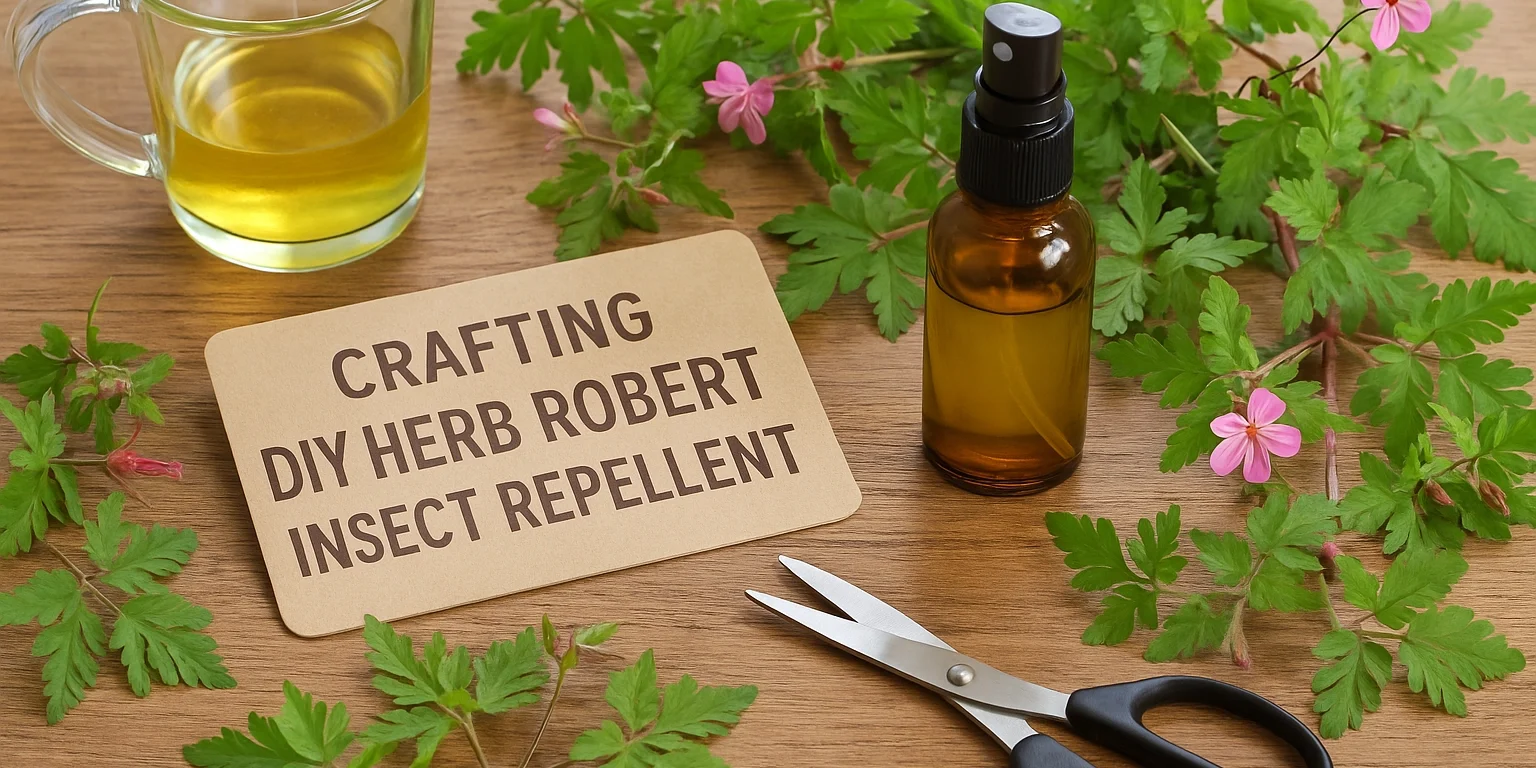
Start with Herb Robert leaves, fresh or dried, the backbone of a herb robert insect repellent. Confirm ID by small pink flowers, reddish stems, and a musky crushed-leaf scent, then see this simple overview in Herb Robert basics. For an 8 ounce batch, use 1 to 2 cups loosely packed fresh leaves or about 1/2 cup dried. Pick a carrier oil for the job, olive for rich glide, coconut for semi-solid balms, sunflower for light, fast absorption. A clean glass jar, fine mesh strainer, and small funnel are the only tools you need to infuse and bottle.
Liquids, boosters, and storage
Use distilled water for purity and even spray, and plan a 1 to 1 oil to water ratio. Optional essential oils add punch and fragrance, citronella, lemon eucalyptus, lavender, or peppermint are common. Plant oils can deliver 120 to 360 minutes of protection in lab testing against mosquitoes such as Culex, see this systematic review. Keep total essential oil near 0.5 to 2 percent, about 20 to 40 drops per 8 ounces. Bottle in amber or cobalt glass, 4 to 8 ounces, which resists oils and UV, then label, date, and shake before use.
Preparing Herb Robert for Use
- Harvest clean Herb Robert only. Bring clean pruning shears, a breathable bag, and nitrile gloves. Identify Herb Robert, Geranium robertianum, by its small five-petal pink flowers and reddish, lightly hairy stems, and confirm leaf shape before cutting, see the county identification sheet in this Herb Robert guide. Harvest during flowering from spring through late summer for stronger aroma, as noted in Along the Grapevine’s field notes. Cut above the crown, and keep your bag dedicated so no competing plants or lookalikes get mixed in. Choose clean ground away from roadsides and treated areas. Outcome, a bag of Herb Robert leaves and tender stems, single-species and field-fresh.
- Rinse and dry to keep your extract clean. Swish the leaves under cool running water to lift dust and grit, then shake off excess. Spread in a single layer on a clean towel or mesh rack in a shaded, ventilated area to protect volatile compounds. Flip once or twice as they dry so moisture does not pool and mold does not start. When leaves feel limp but surface-dry, you are ready to move on. Outcome, clean leaves with no visible debris and minimal surface moisture.
- Crush to release aroma and actives. Use a mortar and pestle to bruise the leaves until the musky scent blooms, or pulse in a dedicated spice grinder for a coarse chop. Fresh leaves bruise best, dried leaves grind best, both are workable. Expect a stronger immediate scent from fresh material and a slightly greener note from dried. Natural repellents can provide 120 to 360 minutes of protection depending on oil mix and conditions, and many plant-based options require more frequent reapplication than synthetics, as noted by Consumer Reports on natural repellents. Outcome, a fragrant mash ready for infusion.
- Combine with a carrier oil to extract and use. Pack a clean jar half full of crushed leaves, then cover with jojoba, fractionated coconut, or olive oil at roughly 1 part plant to 2 to 4 parts oil by volume. For a cold infusion, cap and rest in a dark, warm spot 10 to 14 days, shaking every other day. For a quicker warm infusion, hold the sealed jar in a 50 to 60 Celsius water bath for 2 to 3 hours, then cool. Strain through fine mesh or cloth, bottle in amber glass, and optionally fortify with 1 to 2 percent total essential oils like lemon eucalyptus or cedarwood for added punch. Outcome, a greenish, herbaceous oil ready for patch testing and targeted outdoor use.
Infusion Methods for Maximum Potency
Before you start, prep a clean workspace and dry glass jars. Use dried Herb Robert for the most stable results, or double the weight if using fresh to account for moisture. Choose a stable carrier such as cold-pressed olive, jojoba, or fractionated coconut oil, all good at extracting fat-soluble constituents. Expect roughly 500 to 650 ml of finished oil per 750 ml of carrier, depending on herb moisture and pressing. Sanitize tools, since water or debris shortens shelf life.
Hot infusion, gentle heat for quicker results
This method speeds extraction without cooking the plant. Aim for a steady 60°C, a safe range that coaxes out aromatics and resinous compounds without scorching. A double boiler or water bath keeps heat indirect and even, which protects aroma and color. Plan on 2 to 3 hours, then cooling to room temp before straining. For technique details, see these practical guidelines on simple hot infusions.
- Combine 250 g dried, or 500 g fresh chopped Herb Robert with 750 ml carrier oil in a heat-safe jar.
- Set the jar in a simmering water bath, keeping the oil near 60°C.
- Cover loosely; warm 2 to 3 hours, swirling gently every 30 minutes.
- Cool fully before straining.
Cold maceration, slow extraction for delicate aromatics
Room-temperature steeping preserves volatile notes and is low effort, ideal if you are not in a rush. Use fully dried herb to prevent microbial growth. Keep the jar in a cool, dark place and agitate to refresh contact between oil and plant surfaces. Four to six weeks yields a rounder, greener profile suited for skin-facing products. For a deeper primer, see this overview of oil macerations.
- Fill a dry jar two-thirds with dried Herb Robert.
- Cover completely with oil, removing air pockets with a clean utensil.
- Seal, label, and store 4 to 6 weeks, shaking every few days.
- Strain at the end of the maceration window.
To finish, line a sieve with muslin and strain, then press solids to collect every drop. Decant into dark bottles and label with herb, oil, and date. For a stronger herb robert insect repellent, add 10 to 20 drops per ounce of essential oils such as citronella, lemon eucalyptus, cedarwood, lavender, or lemongrass; citronella is widely recognized for mosquito control, as outlined here: citronella oil. Many essential oils provide 120 to 360 minutes of complete protection against certain mosquitoes in lab settings, so blending extends practical field time. Patch test, avoid eyes, and store cool; well-made infusions typically last up to a year. Transition next into balm, spray, or soap formats as your kit and mission require.
Proper Application for Effective Results
Before you begin, have your herb robert insect repellent ready, plus cotton pads, a clean cloth, and drinking water for quick wipe downs. Herb Robert, Geranium robertianum, has a long folk history as a skin rub, see Herb Robert | RHS Advice, though modern evidence is limited. Plant based repellents can still perform well, with one trial showing an 80 percent malaria reduction when used alongside nets, see randomised clinical trial in the Bolivian Amazon. If you blend your herb robert infusion with proven oils like citronella or lemon eucalyptus, as noted in natural repellent ideas, you will usually get steadier results.
Step-by-step application
- Cover exposed skin, avoid sensitive areas. Shake the bottle, then mist calves, forearms, neck, and ankles until the skin looks lightly sheened, not wet. For the face, spray into your hands and pat along the hairline and jaw, keep away from eyes, lips, and any cuts. Expect a protection window of roughly 2 to 3 hours in calm conditions; essential oil blends commonly show 120 to 360 minutes against some mosquitoes, so plan your timing.
- Reapply after sweat, swimming, or heavy brush. If you feel insects landing rather than hovering, reapply immediately, even if it has been less than two hours. In hot, humid weather or high wind, shorten the interval to about 90 minutes. Wipe salt, sunscreen buildup, or mud with a damp cloth first, then respray for better adhesion.
- Use a diluted mix for kids and sensitive skin. Cut your standard spray to half strength by adding equal parts distilled water or carrier hydrosol, or target about 1 to 2 percent total essential oils if you use them. As a rule, adults apply to their hands first, then lightly spread on a child’s arms and legs, never on hands or near eyes and mouth. Patch test the diluted repellent on the inner forearm for 15 minutes before broader use.
- Treat clothing and camp gear, then let it dry completely. Lightly mist hat brims, sock cuffs, shirt collars, pack straps, and tent doors, then hang items until dry to the touch. Do a fabric spot test in a hidden area to check for staining or color shift. A dry finish creates a scent curtain around high traffic points and reduces skin transfer on long carry days. It is a simple step that keeps you bite resistant while keeping fabrics comfortable.
Common Mistakes and Troubleshooting
Before you troubleshoot
Prerequisites: You have correctly identified Geranium robertianum, prepared an infusion or spray, and followed clean prep practices from earlier sections. The goal here is to recover performance and user comfort without scrapping your entire batch. With plant-based repellents gaining traction and a market projected to reach 9.619 billion USD by 2030 at a 5.54% CAGR, dialing in quality and consistency matters.
Materials needed: paper bags or mesh trays for drying, amber glass bottles with tight caps, desiccant packs, a cool dark cabinet or refrigerator, soft essential oils like lavender or rose geranium, carrier oil, cotton swabs, and bandages for patch testing.
Step-by-step fixes
- Eliminate contamination at the source. If your herb robert insect repellent seems weak or smells off, retrace your harvest. Plants gathered within 50 to 100 feet of roads, treated lawns, or drainage ditches may carry residues that mute aroma and activity. Look for dust film, black spotting, or insect damage that suggests compromised chemistry. Re-harvest from clean understory, rinse, then dry fully before reinfusing. Many users see a clear bump in performance after moving away from trailheads and parking lots.
- Protect potency with tight storage. Light, heat, and oxygen flatten volatile compounds that bugs dislike. Dry herb until leaves snap, then store with a desiccant in airtight jars, out of light, below 25 C. Keep infused oils and balms in amber glass; water-based sprays do best in the fridge, shaken before use, made in 4 to 6 week batches. If protection drops from a solid two to four hours, a range often reported for essential-oil repellents, to under an hour, suspect oxidation and remake with fresher inputs.
- Tame a strong scent without losing bite. If Herb Robert’s musk is overwhelming, blend in softer, still-effective notes. Start with 2 percent total essential oils for adults, adjusting up to 3 percent as needed; keep children’s formulas near 1 percent. Try 1 percent lavender plus 0.5 percent rose geranium, then evaluate outdoors for both scent and performance. Add or reduce in 0.25 percent steps until the aroma sits cleanly without lingering harshness.
- Troubleshoot skin reactions with careful testing. Patch test a pea-sized amount on the inner forearm, cover, and wait 24 hours. If redness or itch appears, halve the essential oil load or switch to a gentler carrier, then retest. In the moment, dilute by applying plain carrier oil to the area, not water. Discontinue immediately for persistent irritation and avoid eyes, lips, and broken skin.
Enhancing Longevity and Effectiveness
You have already prepared a clean Herb Robert infusion or spray. The next step is making sure it stays potent and safe. Natural repellents rely on volatile compounds, which degrade with heat, moisture, and light. Smart storage extends usefulness and also keeps performance predictable in the field. Even with perfect storage, remember that essential oil based repellents typically protect for about 120 to 360 minutes, so plan to reapply during longer outings. Use the steps below to preserve your herb robert insect repellent and to help others trust and adopt it.
Prerequisites, materials, and expected outcomes
- Prerequisites: Finished Herb Robert spray, oil infusion, or balm in a clean container.
- Materials: Amber or opaque glass bottles or tins, tight-fitting lids, labels, fine-tip marker, silica gel packs for storage bins, optional vitamin E at 0.5% for oil-based products.
- Expected outcomes: Consistent scent strength, slower oxidation, reduced microbial risk, and confident use across a full season or more.
Step-by-step
- Store cool and dry. Keep bottles between 40 and 80 degrees Fahrenheit, out of kitchens, cars, window sills, and tents with temperature swings. Use a sealed bin with a small silica gel pack if your storage area is humid. Properly stored dried herbs can stay effective for 1 to 3 years according to this dried herbs shelf-life guide.
- Block light. Transfer finished repellent into amber or opaque glass. Fill to the shoulder to minimize headspace, then cap tightly.
- Stabilize oils. For oil-based balms or roll-ons, add 0.5% vitamin E to slow oxidation. Keep away from plastic that can soften or leach under essential oils.
- Label every batch. Note date, formula, and source. Rotate first in, first out.
- Inspect monthly. Watch for faded color, weak or off-smell, clumping, moisture beads, or visible mold. Discard at the first sign of spoilage.
- Educate and share. Give a small labeled sample, explain reapplication timing, and show storage. Mention that natural repellents are in demand and the market is projected to reach roughly 9.6 billion dollars by 2030 at a 5.54 percent CAGR, which reflects growing trust in plant-based options.
Ready for the next trip, your kit stays lean, effective, and field-proven.
Conclusion
Herb Robert gives you a clean, practical path to bug protection. You now know how to identify and harvest it responsibly, create either a speedy alcohol spray or a slow, potent vinegar infusion, and convert both into a gentle spritz or salve. You have clear ratios, tools, and timelines, plus guidance on shelf life, storage, safety, and kid and pet considerations. You can also boost results with compatible herbs or essential oils.
Your next step is simple. Patch test, then make a small batch this week. Note what works, tweak the formula, and record your ratios. Share your results or questions in the comments, and pass the recipe to a friend who hikes. With a few mindful steps, you can bottle a reliable, natural repellent and enjoy the outdoors with confidence.