How to Make a Useful Potting Bench from Basic Lumber
A potting bench is not just an outdoor decoration with a few terracotta pots on top. A useful one gives you a clean place to fill containers, start seeds, trim herbs, and keep the small tools that otherwise disappear into the garage. It can be built from basic lumber with straightforward joinery, and it does not need to be oversized to make gardening easier. The same build-it-for-use mindset carries into A simple wood planter box that fits a deck or dock, where a simple design and durable materials keep the project useful.
Before cutting boards, think about where the bench will live. A spot near a hose, shed, or garden area is ideal, but the bench should not block a walkway or sit where roof runoff will soak it constantly. A little shelter is helpful, especially if you plan to leave soil, hand tools, or seed trays on it. Measure the area and decide whether the bench needs a lower shelf, hooks, or a back rail before you start building.
Build around a comfortable working height
Keep the work surface easy to reset
Set the bench at a useful height
Most people are comfortable working at a surface around waist height, often thirty-four to thirty-eight inches depending on the user. The important part is not a perfect number; it is avoiding a bench so low that every repotting job becomes a backache. Make the top deep enough for a pot, a bag of soil, and a little elbow room. A depth around twenty inches is often practical without making the bench hard to reach across.
Use cedar or another durable outdoor wood if the bench will stay outside year-round. Exterior-rated screws and simple leg braces are usually enough for a strong build. If you are working with basic construction lumber, protect it from direct ground contact and keep the design open so rain can drain and air can move through it. A slatted top is fine for many uses, but a removable solid work surface can make mixing soil less messy.
Add storage where it will actually help
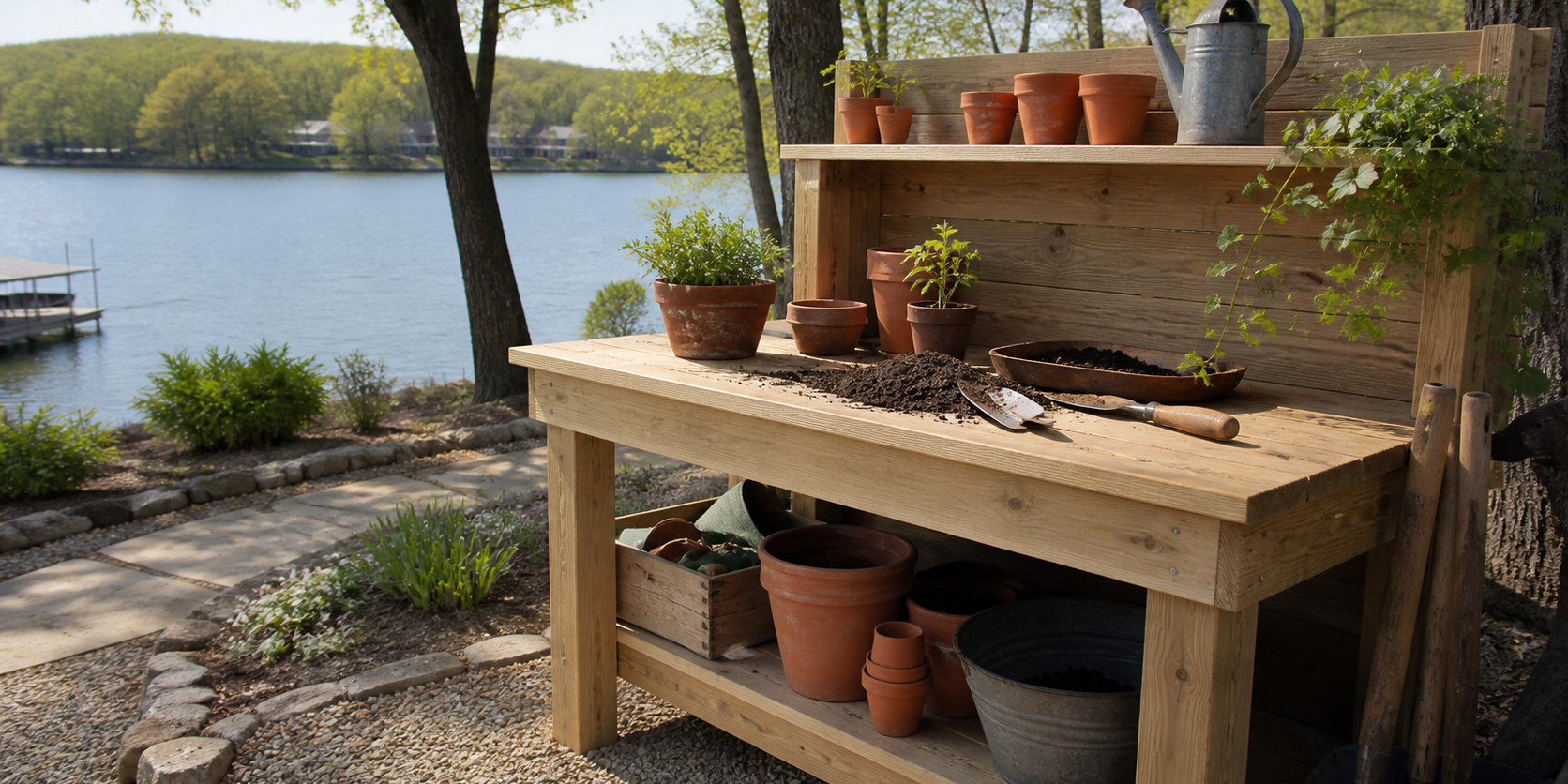
A lower shelf is valuable for bags of potting mix, empty pots, and watering cans. Leave enough clearance beneath the shelf so it does not trap leaves and dirt. A few hooks on the side can hold hand trowels, gloves, and pruners. Avoid adding so many cubbies and shelves that the bench becomes hard to clean; this is a work surface, not another place for clutter to collect.
Build for repeated use. A comfortable height and clear surface matter more than elaborate storage. Let the bench support the garden. A related build to consider is A simple wood planter box that fits a deck or dock.
- Set the work surface at a comfortable height for the person using it.
- Use exterior screws and braces for a stable frame.
- Add a lower shelf for soil and pots, leaving room to sweep below it.
- Keep the top simple enough to clean after every project.
- Place the bench near water and growing areas without blocking traffic.
Design for soil, water, and changing seasons
Gardening is messy, and the bench should be ready for that. Skip delicate finishes that will show every soil stain. Smooth sharp edges, sand splinters, and let the wood age naturally or use a finish appropriate for outdoor furniture. If you add a sink basin or removable tray, make sure water has a clear place to drain and will not run back toward the house.
In Missouri, spring rain and summer heat can be hard on outdoor wood. Check screws and braces once or twice a year, sweep soil away from joints, and move plastic pots off the surface when possible so moisture does not stay trapped underneath. Small maintenance steps keep a basic bench useful far longer than a complicated design that is hard to repair.
For reliable wood-science information for outdoor projects, USDA Forest Products Laboratory is a useful source before making a final decision.
Let the bench support the garden you have
A potting bench becomes valuable when it reflects the projects you actually do. If you grow herbs in a few containers, keep the supplies for those containers close by. If you start seeds, make space for trays and labels. If you build planters, use the bench as a staging area for hardware and cut pieces. The design can evolve as your garden changes.
For a custom growing feature that pairs durable woodworking with simple home food production, see our custom Kratky method planter boxes. The University of Missouri Extension also has useful guidance for planning containers and garden workspaces.
Start with a sturdy frame, a comfortable top, and just enough storage. A simple potting bench built from basic lumber can turn a few minutes of planting into an easier, cleaner part of the day.